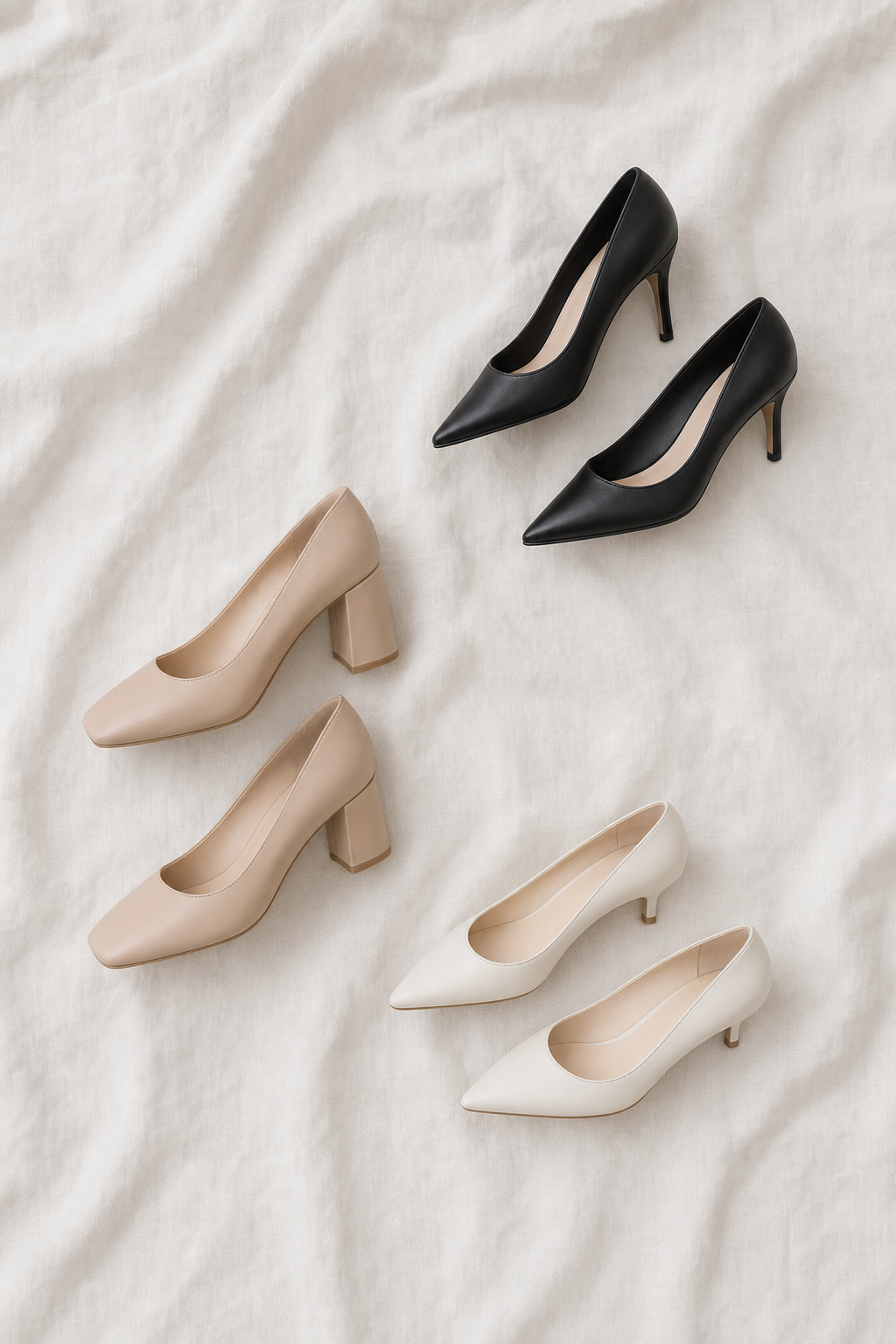
Most designer footwear is built on a narrow last, and the fashion end of Scandinavian design is no exception. If your feet are wide, the standard advice — “just size up” — makes the shoe longer without making it meaningfully wider, and you end up with heel slip on top of the original problem.
This edit is the honest version: which Nordic brands actually accommodate width, which need a workaround, and which are not worth your time no matter how much you like the look.
How we assess width. We work from each brand’s published last and fit guidance, its own size-guide language, the toe shapes it offers, and the recurring themes in publicly available customer reviews. We do not measure lasts ourselves and we don’t claim to — see our affiliate disclosure for how this site is funded. Fit is personal; treat this as a shortlist to try, not a guarantee.
The Short Answer
- Best genuinely wide last: Sania d’Mina — built wide across the range.
- Best with an explicit wide fit: Vagabond Shoemakers — actual wide-fit options, at the lowest price here.
- Best standard-fit brand that still works: ATP Atelier — generous last, round and square toes.
- Approach with caution: Flattered and Anonymous Copenhagen — both run narrow.
The Edit
1. Sania d’Mina — the one built for this
Sweden, roughly $300–$500.
The smallest and least-known label we track, and the one that solves the actual problem. Sania d’Mina builds on an unusually wide last as standard, which makes it one of very few brands offering a properly elegant heel to feet that most designer labels simply don’t fit. Nothing about the design signals “comfort shoe”.
Who it’s for. Anyone who has given up on designer heels because of width rather than price.
What to know. Availability is the catch — the range is small and stock is patchy. Check what’s actually in your size before you commit to a style.
2. Vagabond Shoemakers — explicit wide fits, sensible money
Sweden, roughly $100–$200.
Vagabond is the only brand in this edit that lists wide-fit options on part of its range, and it runs to EU 43 — more size range than anything else here. The block-heel ankle boots are the strongest option: a broad, square-ish toe box and a stable heel.
Who it’s for. A first wide-fit heel, or anyone unwilling to spend $300 on a fit gamble.
What to know. Wide fits are style-specific, not range-wide — confirm on the individual product page rather than assuming. Materials are mixed across the range; the leather styles are the ones worth having.
3. ATP Atelier — standard last, generous cut
Sweden, roughly $250–$450.
Not marketed as a wide-fit brand, but its last is standard-to-generous rather than fashion-narrow, and the range leans towards block heels, mules and open shapes — all of which forgive width far better than a closed pointed pump. The vegetable-tanned leather is also the most stretchable material in this edit, so a cobbler can buy you real room.
Who it’s for. Wide but not extremely wide feet, buying something to keep.
What to know. True to EU sizing — don’t reflexively size up. Prioritise the mules and open styles over the closed courts.
4. Roccamore — width isn’t the point, but comfort is
Copenhagen, roughly $200–$350.
Roccamore’s engineering is in the insole, not the last, so it does not solve a width problem directly. What it does solve is everything else that makes a heel painful over a long day. If your feet are moderately wide and your real complaint is fatigue rather than pinching, this is the more useful buy.
What to know. Standard width. If pinching across the ball of the foot is your specific issue, start with Sania d’Mina or Vagabond instead.
Two to approach with caution
Flattered runs slightly narrow — a documented, consistent theme, and the brand’s own guidance acknowledges it. The rounder-toe styles work for mildly wide feet if you go up half a size; the pointed styles do not. It’s an excellent brand, covered in full in our comparison with ATP Atelier, but it is not the answer to a width problem.
Anonymous Copenhagen runs small as well as narrow, and leans hard on square and pointed fashion shapes with tight toe boxes. Buy it for a look you love, not for fit.
Fit at a Glance
| Brand | Last width | Explicit wide fit | Best toe shapes | Sizing advice |
|---|---|---|---|---|
| Sania d’Mina | Wide | Wide as standard | All | True to size |
| Vagabond | Standard–wide | Yes, some styles | Square, round | True to size |
| ATP Atelier | Standard–generous | No | Mules, open, round | True to EU |
| Roccamore | Standard | No | Round | True to EU |
| Flattered | Narrow | No | Round only | Size up half |
| Aeyde | Standard | No | Square | True to EU |
| Anonymous Copenhagen | Narrow | No | — | Size up |
Four Rules That Save Money
- Toe shape beats heel height. A pointed toe narrows exactly where your foot is widest. A square or round toe keeps the width where your metatarsals actually sit. This single choice does more for comfort than dropping 20 mm of heel.
- Size up only as a last resort. Length is not width. Going up a size moves the widest part of the shoe forward of the widest part of your foot and adds heel slip. Choose a wider last first.
- Buy unlined full-grain leather if you plan to stretch. A cobbler can gain roughly half a size of width in it. Suede gives far less, synthetics give nothing.
- Measure late in the day. Feet swell measurably by evening. A shoe fitted at 9am on a shop floor is a different shoe at 7pm at a wedding.
Before ordering anything, read the Scandinavian shoe sizing guide — EU sizing conversions are where most of the returns in this category come from. And once you’ve found a pair that fits, the leather care guide will keep the fit where you want it.