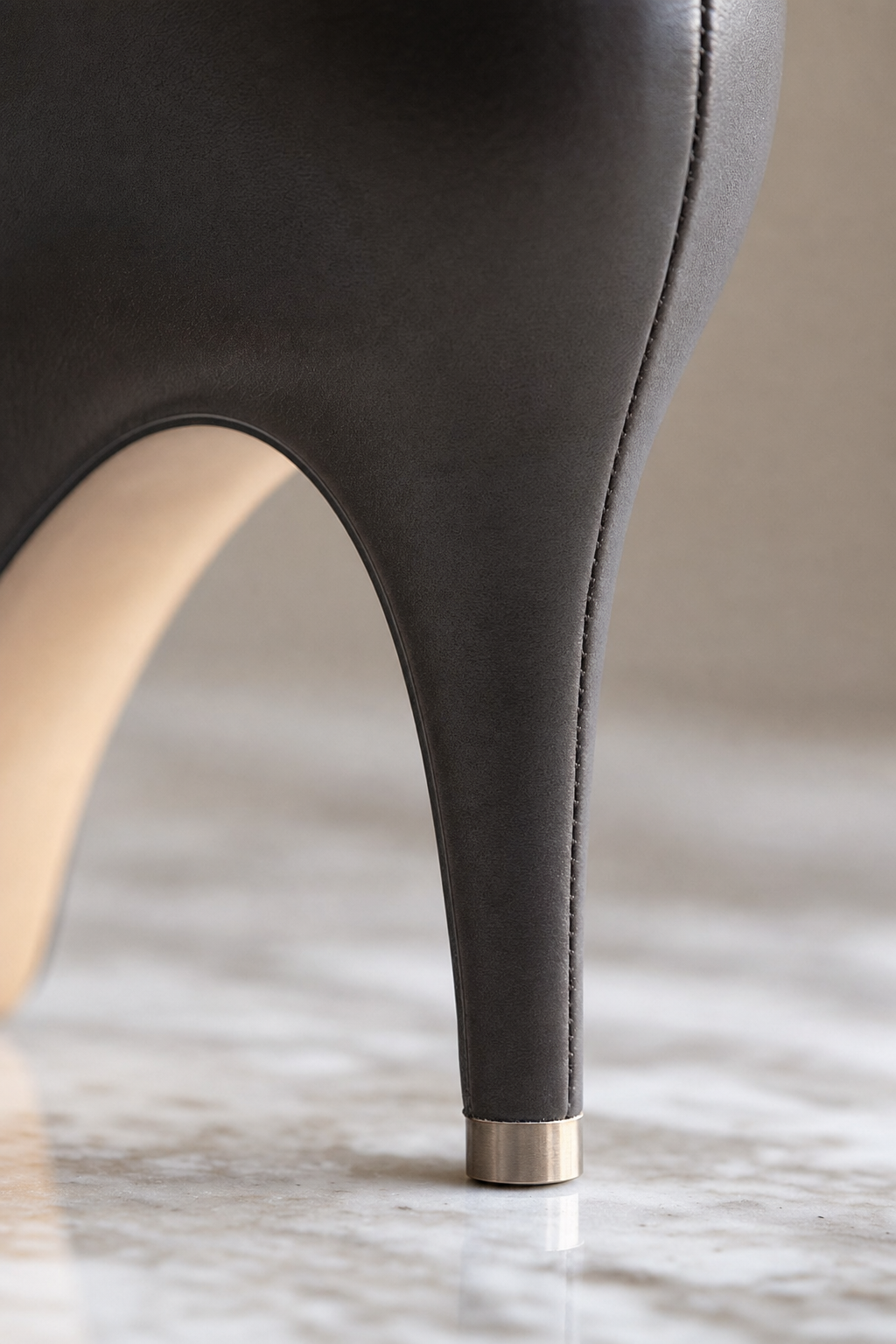
Two Nordic brands, both founded on the same complaint — that heels are needlessly uncomfortable — and two different fixes. Roccamore went to an orthopaedic shoemaker. Flattered redesigned the last. Both work. They suit different people, and the difference is more specific than “one is comfier”.
How we compare. This comparison is built from each brand’s published construction and design rationale, their own fit guidance, and the recurring themes in publicly available customer reviews. We do not run wear tests. See our affiliate disclosure for how the site is funded.
The Difference in One Paragraph
Roccamore puts the engineering inside the shoe — a structured insole developed with a Copenhagen orthopaedic specialist, designed to hold the foot closer to anatomically correct while it is pitched forward. Flattered puts the engineering into the shape of the shoe — a rounder toe box, a supportive footbed, and heel heights kept in the range where pitch stays manageable. Roccamore corrects the posture; Flattered avoids creating the problem.
| Category | Roccamore | Flattered |
|---|---|---|
| Origin | Copenhagen, Denmark | Stockholm, Sweden |
| Price range | $200 – $350 | $180 – $350 |
| Comfort approach | Orthopaedic insole | Anatomical last + footbed |
| Typical heel height | 50–80 mm | 50–70 mm |
| Last width | Standard | Slightly narrow |
| Toe shapes | Round, almond | Round, square, pointed |
| Resoleable | No | No |
| Expected life | 4–7 years | 4–7 years |
| Best for | Standing all day, foot pain | All-day wear, broad style range |
Comfort: Roccamore, for the Hardest Cases
Roccamore’s insole is the more serious intervention. It was developed with an orthopaedic shoemaker specifically to address how the foot sits inside a heel, and it is the reason the brand gets recommended by people who had otherwise stopped wearing heels entirely.
Flattered’s footbed is genuinely supportive — far better than the flat, padded insole that passes for comfort at this price — but it is a good general-purpose design rather than a corrective one.
The practical split. If you are standing largely still for six hours, Roccamore. If you are moving through a normal long day, the gap narrows to the point where fit and style should decide.
Style Range: Flattered, Comfortably
This is where Flattered pulls ahead and it isn’t close. Flattered runs a much broader catalogue — mules, ankle boots, kitten heels, block heels, square and pointed toes, and a properly neutral Scandinavian palette. Roccamore’s range is narrower and more consistent in shape, which is the natural consequence of building everything around one insole.
If you want a specific silhouette, Flattered probably makes it. If you want the most comfortable version of a fairly classic heel, Roccamore makes that.
Fit: A Real Difference
Both are true to EU sizing, but Flattered’s last is narrower, and this is the most common source of disappointment with the brand. Wider feet consistently do better going up half a size, and the round-toe styles accommodate width far better than the pointed ones.
Roccamore runs standard width — not wide, but not fashion-narrow either — which makes it the safer blind order of the two.
Neither brand solves a genuine width problem. If that’s your constraint, start with the wide-fit edit instead.
Longevity: A Tie, and a Caveat
Both use bonded rubber soles that are not designed to be replaced, so in both cases the shoe’s life is effectively its sole’s life — call it four to seven years of regular wear. Neither is an heirloom purchase, and neither pretends to be.
If resoleability is what you actually want, you are shopping for ATP Atelier, and the ATP Atelier vs Flattered comparison is the more useful page.
The Verdict
Choose Roccamore if comfort is a physical requirement rather than a preference — standing work, long events, or a history of foot pain in heels. You are paying for the insole, and the insole is real.
Choose Flattered if you want an all-day heel with a much wider choice of shapes, and your comfort requirement is “shouldn’t hurt by dinner” rather than “must correct my posture”. Size up half if your feet are wide.
Both appear in our most comfortable designer heels edit, which explains the four factors that actually produce comfort in a heeled shoe — useful before you buy either.