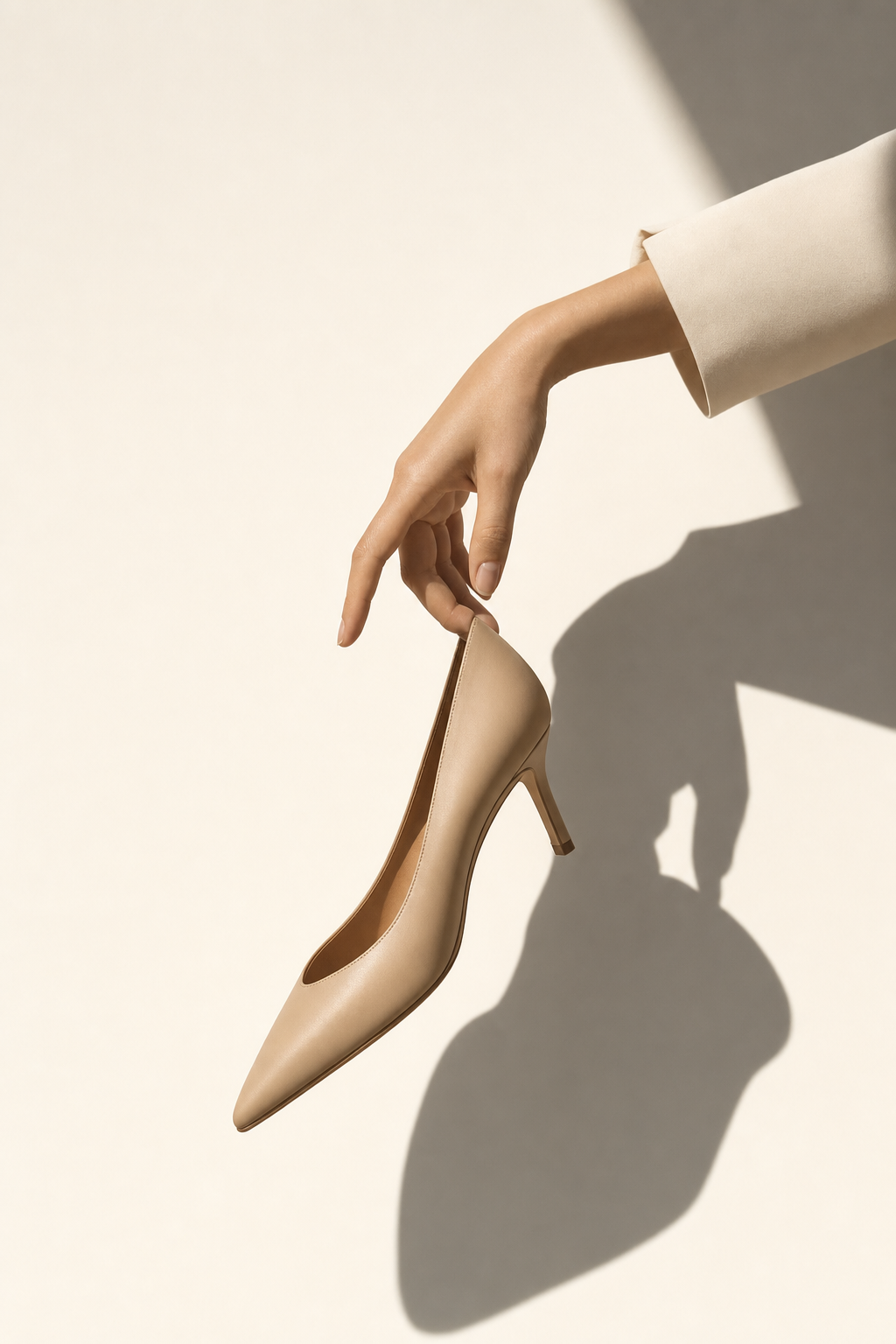
Both are Swedish. Both are made in small-scale European workshops. Both sell heels in the $180–$450 range to the same person — someone who wants to buy less and buy better. So why does the choice matter? Because underneath, they are completely different propositions.
How we compare. Block & Point is a research-led edit, not a testing lab. This comparison is built from each brand’s published construction and material specifications, their own sizing guidance, and the pattern of themes in publicly available customer reviews. Where we give a longevity estimate, it is a judgement drawn from construction type — resoleable leather sole versus bonded rubber — not a measured result. We say so plainly because a comparison you can’t audit isn’t worth reading.
The Philosophy
ATP Atelier began in Skåne in 2013 as a leatherwork project — an argument that vegetable-tanned hide, sourced correctly and constructed honestly, should be the starting point of any shoe worth making. The brand’s ethos is material-first. The heel shape, the last, the silhouette are all in service of the leather.
Flattered, founded four years earlier in Stockholm, started from the opposite direction: an anatomical question. Why are heels uncomfortable? The answer, they argued, was lazy construction — narrow toe boxes, inadequate arch support, poor weight distribution. Flattered built its heels to fix those problems first and made them beautiful second.
Neither approach is wrong. But they produce very different shoes, and knowing which philosophy you need is the first step to knowing which brand to buy.
| Category | ATP Atelier | Flattered |
|---|---|---|
| Price range | $250 – $450 | $180 – $350 |
| Leather quality | Best-in-class | Excellent |
| Out-of-box comfort | Good, needs breaking in | Excellent from day one |
| Heel range | Block, stacked, flat mules | Block, kitten, ankle boots |
| Sizing | Runs true to EU | Runs slightly narrow |
| Resoleable | Yes — leather sole | No — rubber sole |
| Expected life (with care) | 8–15 years | 4–7 years |
| Best for | Investment pieces | Daily wear, travel |
Leather: ATP Atelier Wins Clearly
ATP Atelier uses vegetable-tanned leather from Southern European tanneries. The process takes weeks, produces a hide that ages well, and results in a shoe that improves with wear — the patina deepens, the leather softens in the right places, and the shoe gradually takes the shape of your foot.
Flattered uses full-grain leather and quality suede, but the sourcing is more conventional. The leather is genuinely good — noticeably above most of its price-point competitors — but it doesn’t carry the same long-term story. At year three, an ATP Atelier heel looks better. A Flattered heel looks the same.
If you care about the material story, ATP Atelier is the only answer in this comparison.
At year three, an ATP Atelier heel looks better. A Flattered heel looks the same.
Comfort: Flattered Wins, and It Isn’t Close
This is Flattered’s founding proposition and it executes on it consistently. The anatomical footbed, wider toe box and considered weight distribution are why wearers routinely describe six-to-eight-hour days in them without the usual complaints. For a heeled shoe, that is a real achievement.
ATP Atelier heels are not uncomfortable, but they ask for a breaking-in period. The leather is stiff out of the box and the shapes are traditional — drawn for the eye before the foot. After two or three weeks of occasional wear they become genuinely comfortable. Before that, they demand respect.
Buying for all-day wear, travel, or events with extended standing? Flattered. Buying for evenings and occasions where you control the duration? Either works, with ATP Atelier the better long-term return.
Sizing and Fit
ATP Atelier runs true to EU sizing across most styles, with some narrow-footed wearers taking half a size down. The last is standard — no unusual quirks, no extreme points. If you know your EU size in any other European brand, ATP Atelier will fit as you expect.
Flattered runs slightly narrow. Wider feet consistently do better going up half a size, and the rounder-toe styles accommodate width better than the pointed ones. This matters most when buying online: read the size guide, and size up when in doubt.
If width is your main constraint in either brand, start with our guide to Scandinavian shoe sizing before you order.
Value: A Different Frame
ATP Atelier costs more and lasts longer. At around $300 for a block-heel mule that can be resoled and looks better at year five than year one, the cost-per-wear arithmetic favours it heavily over a five-to-ten-year horizon.
Flattered costs less and is wearable immediately. If you need a reliable, beautiful heel for the next three or four years and don’t want a breaking-in period, Flattered at $220 is better value than ATP Atelier at $320 — even accounting for the shorter life.
The useful question isn’t which brand is “worth it”. It’s which brand matches how you buy. Investment wardrobe? ATP Atelier. Rotation pieces? Flattered.
The Verdict
Choose ATP Atelier if you want a heel you will keep for a decade. The leather, the resoleability and the way it ages make it the investment option. Budget a short breaking-in period and buy your true EU size.
Choose Flattered if comfort is non-negotiable from day one. The anatomical engineering is real, the aesthetic is properly Scandinavian, and the lower price makes the decision easier. Consider half a size up if your feet are wide.
Still deciding between comfort-first brands? Our Roccamore vs Flattered comparison covers the other end of that argument — and the full brand directory has all seven labels we track.