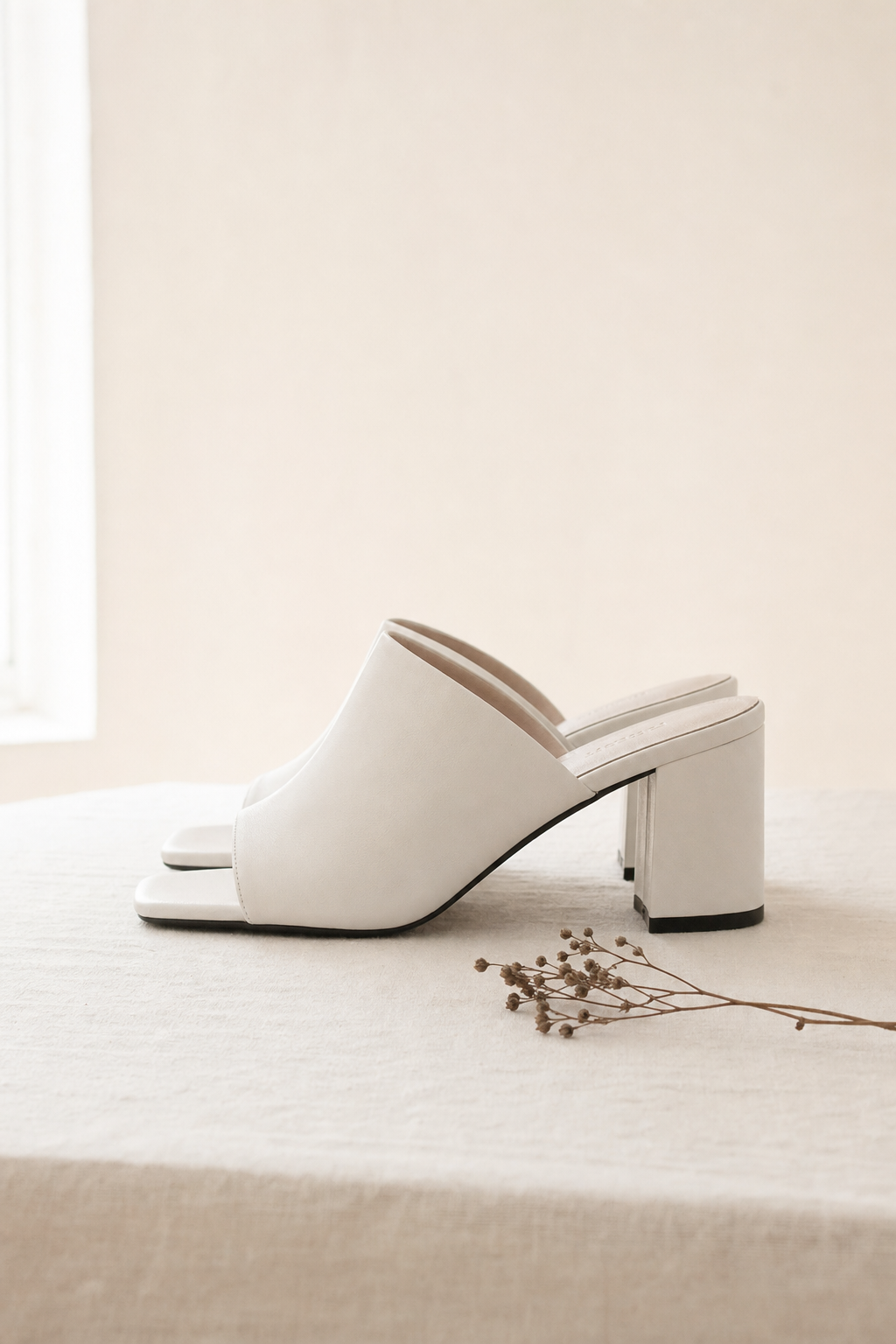
The block heel is the shape Scandinavian design got right before anyone else took it seriously. Not a compromise for people who can’t manage a stiletto — a different answer to the same question, where stability is treated as a design feature rather than an apology.
This is the edit we keep coming back to: seven Nordic block heels that justify their price, ordered by how reliably they deliver what they promise.
How we rank. Block & Point is research-led and reader-funded. We rank on three things: construction (sole type, whether the shoe can be resoled, leather grade), fit intelligence (last shape, width accommodation, how honest the brand’s own size guidance is), and price-to-durability honesty (does the shoe last as long as the price implies). We are not paid by any brand featured here, and no brand has seen this page before publication. Where we estimate longevity, that is a judgement from construction type, not a wear test — see our affiliate disclosure for how the site is funded.
The Short Answer
- Best overall: Flattered — the anatomical footbed makes it the one you’ll actually wear.
- Best investment: ATP Atelier — resoleable, vegetable-tanned, improves with age.
- Best under $200: Vagabond Shoemakers — the clean Nordic line without the commitment.
- Best for long days on your feet: Roccamore — orthopaedic insole, designed with a Copenhagen shoemaker.
The Edit, Ranked
1. Flattered — the one to buy if you’re buying one
Stockholm, roughly $180–$350.
Flattered exists because its founders thought heels were uncomfortable for lazy reasons: narrow toe boxes, no arch support, weight in the wrong place. The block-heel mules and ankle boots are the clearest expression of the fix. A rounder toe, a supportive footbed, a stacked heel in the 50–70 mm range that you can stand in through a gallery opening and keep on through dinner.
Who it’s for. Anyone whose honest requirement is “beautiful, but I need to wear these for six hours.”
What to know. Runs slightly narrow — go up half a size if your feet are wide. The rubber soles are not resoleable, so treat this as a four-to-seven-year shoe rather than a decade one.
2. ATP Atelier — the investment block heel
Skåne, roughly $250–$450.
The Swedish leather studio that made artisan craft aspirational. Vegetable-tanned hide from Southern European tanneries, leather soles that a cobbler can replace, and block and stacked shapes that are drawn for the eye first. These are the heels that look better at year five than year one.
Who it’s for. People who buy rarely and keep things. The cost-per-wear case is strong if you actually maintain them.
What to know. Stiff out of the box — budget two to three weeks of occasional wear before they soften. True to EU sizing. Full comparison against Flattered is here.
3. Vagabond Shoemakers — the sensible entry point
Sweden since 1973, roughly $100–$200.
Half a century of Swedish shoemaking buys a confidence newer brands have to earn. Vagabond sits at the accessible end of the Nordic spectrum: the same clean lines and restrained design language, at a price that doesn’t require a spreadsheet. The block-heel ankle boots are the standout — properly utilitarian, genuinely well-shaped.
Who it’s for. A first Scandinavian heel, or anyone who wants the look without a $300 decision.
What to know. Materials are mixed — some styles are leather, some microfibre and synthetic blends. Check the specific pair. Sizing runs EU 35–43 with wide fits on some styles, which is more range than most of this list offers.
4. Roccamore — the one built around the foot
Copenhagen, roughly $200–$350.
Roccamore’s whole premise is an insole developed with a Copenhagen orthopaedic shoemaker, designed to keep the foot closer to anatomically correct inside a heel. The aesthetic doesn’t advertise it — these read as clean Danish heels, not as comfort shoes — which is exactly the point.
Who it’s for. Long days, standing work, anyone who has given up on heels for medical rather than aesthetic reasons.
What to know. The comfort engineering is in the insole, so it does most of its work in the mid-heights. See Roccamore vs Flattered for the direct comparison.
5. Aeyde — Berlin precision, Nordic sensibility
Berlin, roughly $250–$400.
Not Scandinavian by geography, but it speaks the language: handmade in Italy, designed in Berlin, direct-to-consumer, and disciplined about the silhouette. Aeyde’s block heels are the most fashion-forward on this list — squarer toes, more architectural heel blocks — without tipping into trend.
Who it’s for. Anyone who finds the Swedish brands slightly too quiet.
6. Anonymous Copenhagen — the trend-aware option
Copenhagen, roughly $150–$300.
The most of-the-moment brand here, and priced accordingly. Anonymous Copenhagen moves faster than the rest of this list — square toes, sculptural block heels, seasonal colour. Buy for the shape you want now rather than as a decade-long proposition.
7. Sania d’Mina — the specialist pick
Sweden, roughly $300–$500.
The smallest label we track and the hardest to find. Sania d’Mina builds on an unusually wide last, which makes it one of the few genuinely elegant options for feet that most designer brands simply don’t fit. Availability is patchy and it is worth checking stock before setting your heart on a style.
Comparison Table
| Brand | Origin | Price | Sizing | Resoleable | Best for |
|---|---|---|---|---|---|
| Flattered | Sweden | $180–$350 | Slightly narrow | No | All-day wear |
| ATP Atelier | Sweden | $250–$450 | True to EU | Yes | Investment |
| Vagabond | Sweden | $100–$200 | True, wide fits available | No | First pair |
| Roccamore | Denmark | $200–$350 | True to EU | No | Standing all day |
| Aeyde | Germany | $250–$400 | True to EU | Some styles | Fashion-forward |
| Anonymous Copenhagen | Denmark | $150–$300 | Runs small | No | Trend pieces |
| Sania d’Mina | Sweden | $300–$500 | Wide last | Yes | Wide feet |
How to Choose
Work down in this order and the decision usually makes itself.
- Width first. If your feet are wide, this filters the list before anything else does — start with the wide-fit edit.
- Then hours. If you need six-plus hours on your feet, you are choosing between Flattered and Roccamore, and price decides.
- Then horizon. Keeping them a decade? ATP Atelier, and accept the breaking-in period. Three to four years? Flattered or Vagabond.
- Then height. A 90 mm block still pitches your foot steeply. Our heel height guide matches height to how you’ll actually use the shoe.
Whatever you land on, the leather care guide is the difference between a four-year shoe and an eight-year one.