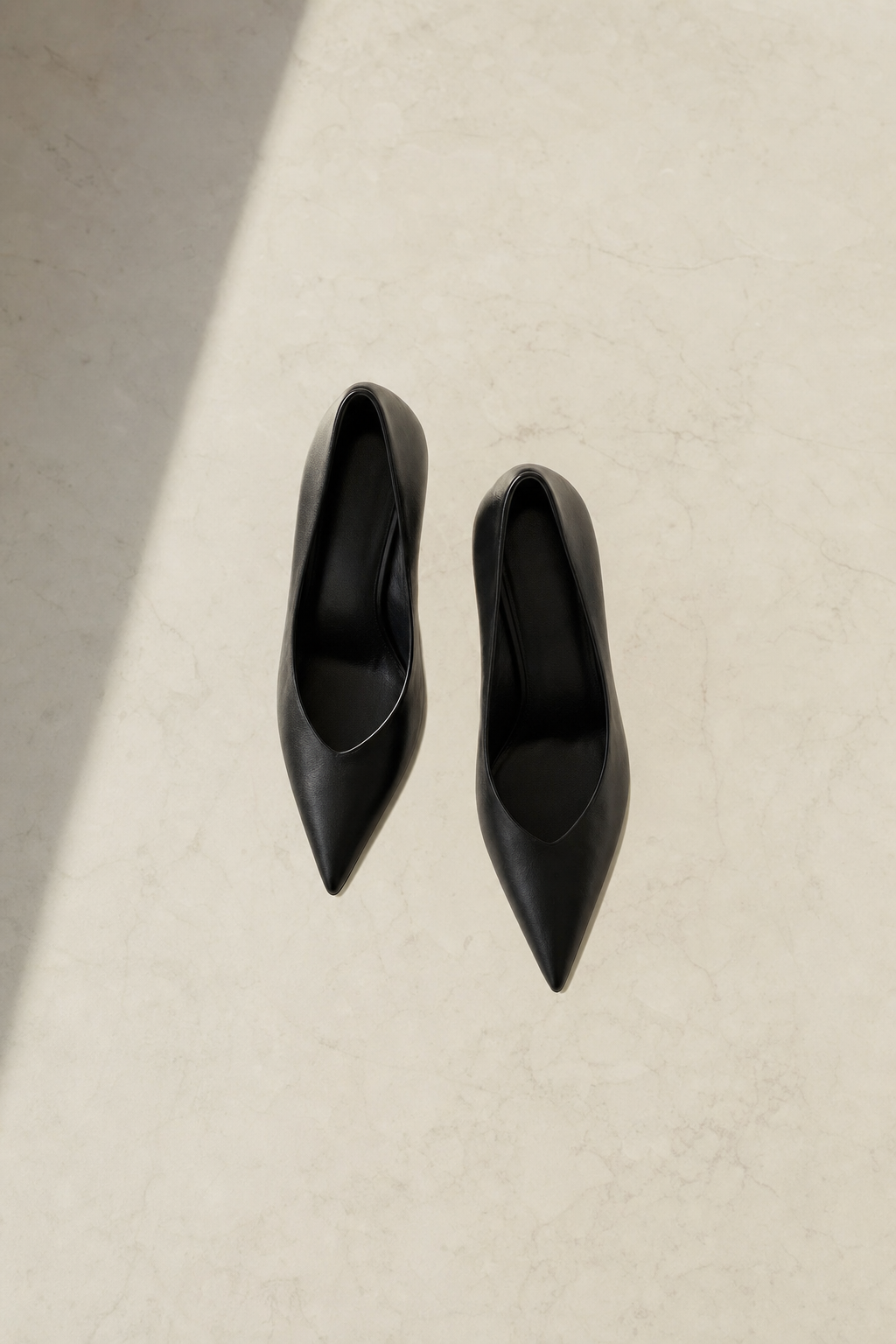
Most brands claiming comfort have added padding and hoped. Roccamore did something more specific: it built its insole with a Copenhagen orthopaedic shoemaker, designed to hold the foot closer to anatomically correct while it is pitched forward inside a heel. That’s a structural claim rather than a marketing one, and it deserves to be assessed as such.
How we assess. This review draws on Roccamore’s published design rationale and construction details and the recurring themes in publicly available customer reviews. We have not run a controlled wear test and do not claim to. See our affiliate disclosure for how the site is funded.
Verdict in Brief
Rating: 4 / 5
The comfort engineering is genuine and it is the reason to buy. The deductions are for a narrow style range and a bonded sole that caps how long the shoe lasts.
Buy it if comfort is a physical requirement — standing work, long events, or a history of pain in heels.
Skip it if you want a wide choice of silhouettes, need a wide fit specifically, or want a shoe you can resole.
What the Insole Actually Does
The claim is narrow and therefore credible: the insole is shaped to support the arch and distribute load while the foot is angled forward, developed with an orthopaedic specialist rather than a product designer.
What that means in practice is that Roccamore addresses the fatigue dimension of heel discomfort — the slow accumulation over hours of standing — more directly than anything else in our directory. What it does not address is pinching, which is a function of the last and the toe box. Those are different problems and the distinction matters when deciding whether this brand solves yours.
The aesthetic deserves credit too. Nothing about a Roccamore reads as an orthopaedic shoe. It looks like a clean Danish heel, which is precisely why it works as a recommendation.
Where It Falls Short
The range is narrow. This is the direct consequence of building everything around one insole — the shapes are consistent and fairly classic. If you want a specific silhouette, Flattered makes considerably more of them at a similar price.
Bonded soles cap the lifespan. Not resoleable, so four to seven years of regular wear is the realistic horizon. At $200–$350 that is defensible, but it is not an investment purchase, and it is worth knowing before you frame it as one.
It doesn’t solve width. Standard last. Buyers with genuinely wide feet sometimes arrive here expecting a fit solution and find a fatigue solution instead. Our wide-fit edit covers the brands that actually address that.
Sizing
True to EU sizing, standard width, limited half sizes. One of the safer blind orders in the directory — measure properly using the sizing guide and order your measured size.
Who Should Buy It
Roccamore is the clearest recommendation in our directory for one specific person: someone who wants to wear heels, has a physical reason not to, and has been told the options are ugly. It is not the most versatile brand, not the longest-lasting, and not the cheapest. It is the one that solves that problem.
For everyone whose requirement is “shouldn’t hurt by dinner” rather than “must correct my posture”, Flattered achieves that for less, with far more choice of shape.
Read next: the full comfort comparison, which explains the four factors that actually produce comfort in a heeled shoe.